Eagle 3D SVG: Laser Cutting Wall Decor Review
As a graphic designer who has spent years bridging the gap between digital concepts and physical products, I approach every new graphic design asset with a critical eye. It is not enough for a file to look good on a screen; it must perform under the pressure of real-world production. Recently, I evaluated the Eagle 3D SVG Multilayer Laser Cut File for a client project involving a boutique outdoor gear brand looking to expand into home goods. The goal was to create a statement piece that embodied strength and freedom without falling into cliché territory. Here is my professional assessment of how this asset holds up in a commercial design environment.
First Impressions and Visual Mood
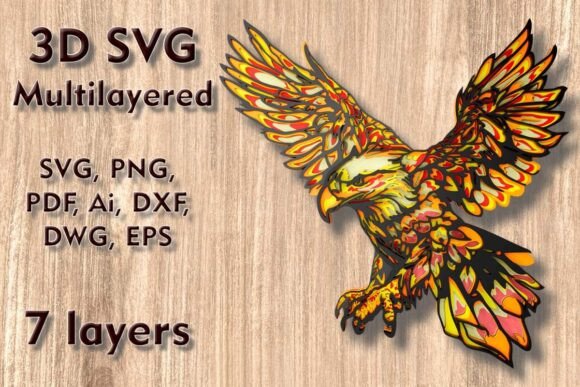
The immediate impact of the Eagle 3D SVG Multilayer Laser Cut File is one of structured elegance. Unlike flat vector illustrations that rely solely on color for depth, this design utilizes seven distinct layers to create a tangible sense of dimensionality. For a designer, this is crucial because it translates digital precision into physical texture. The visual mood is bold yet refined, making it an excellent candidate for Wall Decor that needs to command attention in a living room or office space.
The style leans towards modern geometric realism. It avoids the overly cartoonish aesthetics often found in basic clipart, instead offering a sophisticated silhouette that appeals to adult consumers. This makes it highly suitable for small business branding efforts where the target audience values craftsmanship and quality. When I first opened the file, the clean lines suggested that it would pair beautifully with minimalist interiors, adding a touch of nature-inspired drama without overwhelming the space.
Performance in Real Design Scenarios
While this asset is explicitly designed for Laser Cutting, its utility extends far beyond just wood or acrylic fabrication. In my workflow, I often use such detailed SVGs as foundational elements for broader marketing visuals. For instance, I rendered the eagle layers in a 3D software to create high-resolution product mockups for the client’s website. These images served as hero graphics for their landing page, significantly boosting the perceived value of their upcoming launch.
For those involved in print-on-demand or running an Etsy product shop, this file is a versatile digital product. It can be adapted for sublimation design on mugs or tote bags by flattening the layers and adjusting the color palette. However, designers must be mindful of the complexity. When used for t-shirt design or sticker design, the intricate details of the seven layers might require simplification if the printing method cannot handle fine lines. It works best when the output method can respect the original fidelity, such as high-quality vinyl cutting or direct-to-garment printing with high resolution settings.
In terms of brand identity, this eagle motif can serve as a powerful symbol for companies wanting to project authority and vision. It fits seamlessly into packaging design for premium products, where a debossed or embossed version of the eagle could add a tactile luxury element. For social media graphics, the layered structure allows for animated content creation, where each layer fades in sequentially, creating engaging motion graphics for Instagram or Pinterest.
Strategic Placement and Limitations
Understanding where to place this asset is key to maintaining visual hierarchy. The Eagle 3D SVG Multilayer Laser Cut File thrives in large layout areas. It is ideal for hero sections on websites, large-format posters, or as the central focus of a Canva template meant for inspirational quotes. The seven-layer structure provides enough visual weight to anchor a design, drawing the eye immediately.
However, caution is required when scaling. The product specifications note a base size of 300 x 300 mm (11.8 x 11.8 inches). While the vector nature of SVG allows for infinite scaling up, reducing the design requires careful consideration. The thin elements, particularly in the feather details and the beak, may disappear or merge if scaled down too aggressively. Therefore, this asset should be used carefully in small sizes, such as favicon icons or small footer logos. It is also less suitable for crowded layouts where it might compete with text or other complex illustrations. For minimalist branding or corporate materials that require stark simplicity, this multi-layered approach might feel too ornate unless significantly simplified.
Technical Notes for Professional Use
Before integrating any design bundle into a client project, I run a series of technical checks. Here are my practical notes for working with this specific file:
- Contrast Testing: Always test the design in pure black and white first. This reveals whether the layers are distinct enough to be cut accurately without relying on color differentiation. If the layers blend together in monochrome, you may need to adjust spacing in your CAM software.
- Material Compatibility: The seven layers suggest a significant depth. Ensure your chosen material—whether plywood, acrylic, or cardstock—can handle this stacking without becoming unstable. For Cricut project users using paper, adhesive management between layers is critical.
- File Inspection: Open the SVG in your preferred vector editor. Check for stray nodes or open paths that could cause laser misfires. Clean up any unnecessary anchor points to ensure smooth cutting paths.
- Typography Pairing: This eagle pairs well with strong sans serif fonts for a modern look or rugged slab serifs for an outdoor vibe. Avoid delicate script fonts that might get lost against the detailed background of the eagle’s wings.
- Licensing Verification: Always confirm the commercial license terms. Since this is intended for commercial design and resale as physical goods, ensure the license covers unlimited sales or specifies any attribution requirements.
Final Verdict on Creative Value
The Eagle 3D SVG Multilayer Laser Cut File is more than just a cut pattern; it is a robust creative design tool that enhances the perceived quality of any project it touches. For designers working in the creative marketplace, it offers a ready-made solution for clients seeking high-impact Wall Decor. Its ability to translate from a digital SVG design to a physical object with minimal friction makes it a valuable addition to any professional’s library.
By respecting its scale limitations and leveraging its layered depth for visual interest, designers can create compelling editorial design pieces, striking web design elements, and profitable physical products. It stands as a testament to how well-prepared digital assets can streamline the workflow from concept to final delivery, ensuring that both the designer and the client achieve a polished, professional result.