Reviewing the New Born Welcome Baby Card Design
As a designer who spends half my life staring at stitch maps and the other half troubleshooting thread breaks, I have learned to be skeptical of digital assets that promise simplicity. When I first pulled the New Born Welcome Baby Card file from my downloads folder, I was not looking for just another cute graphic. I was looking for a reliable asset that could hold up under the needle, translate well to fabric, and ultimately help my clients sell more finished products. This review is not about hype; it is about how this specific 3D SVG performs when you move from the screen to the sewing room.
First Impressions and Visual Personality
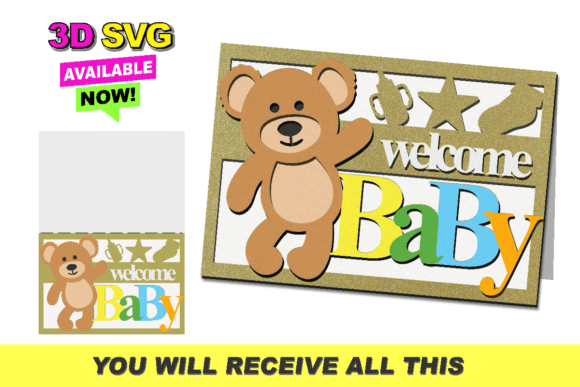
The immediate mood of the New Born Welcome Baby Card is soft, celebratory, and clean. In the world of Shapes, baby-themed designs often fall into two traps: they are either overly complex with tiny details that disappear in stitching, or they are so generic they lack character. This design strikes a balance. The layout feels intentional, with a visual personality that suggests warmth without being cluttered. For an embroidery designer, this is crucial. We need designs that communicate their message instantly, whether they are sitting on a nursery wall or stitched onto a gift tag.
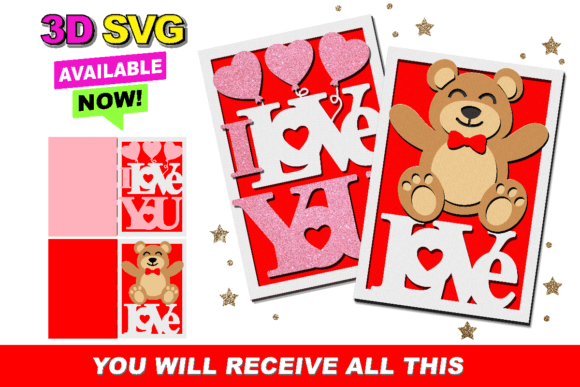
Because this is marketed as a 3D SVG, my initial concern was compatibility. The description notes it is easy to cut in Silhouette Studio and Cricut Design Space. For those of us primarily focused on machine embroidery design workflows, this distinction matters. While SVGs are vector-based and scalable, using them for embroidery often requires converting them into a proper embroidery file format like PES or DST, unless you are using a hybrid cutter-embroiderer setup. If you are planning to use this strictly for cutting vinyl or paper cards, the workflow is straightforward. However, if you intend to digitize this shape for stitching, you must ensure your software can interpret the 3D layers correctly.
Real-World Application: The Custom Gift Scenario
To truly test a design, I imagine it in a real project. Let’s say a client commissions a personalized gift set for a friend’s new baby. They want something higher-end than a store-bought card. I envision using the New Born Welcome Baby Card concept as a layered appliqué on a high-quality cotton tote bag or perhaps as a structured patch on a muslin swaddle blanket.
In this scenario, the design’s clarity is its strongest asset. When working with custom apparel or home goods, customers react best to designs that look professional from a distance. If I were to digitize this shape for sweatshirt embroidery, I would focus on maintaining the integrity of the outer lines. The "welcome" aspect needs to be legible. For a handmade product sold on Etsy, presentation is everything. A crisp, well-stitched design builds customer trust. It tells the buyer that the maker cares about precision.
However, we must address the material. If you are applying this to a tote bag design made of canvas, the fabric texture will interact with the stitches. A fill stitch might get lost in the weave if the density is too low. Conversely, on a smooth jersey knit for a baby embroidery project, you must be wary of puckering. This is where the designer’s judgment comes in. You cannot simply drop any file onto any fabric and expect perfection.
Navigating Technical Challenges
There are specific situations where the New Born Welcome Baby Card requires careful handling. First, consider the hoop size. If you are working with a small 4x4 hoop, you may need to scale the design down. Be cautious here. Reducing size increases stitch density relative to the area, which can lead to needle breaks or fabric distortion. Always check the stitch density after resizing.
Second, think about the background. This design likely relies on contrast. On dark fabric, light thread colors will pop, but you must ensure there are no gaps in the satin stitch borders that reveal the dark backing. On thin or stretchy fabrics, such as those used for caps or lightweight t-shirts, a heavy stabilizer is non-negotiable. Without proper support, the weight of the threads can pull the garment out of shape, ruining the finished product.
Another critical point is the "3D" aspect. If this SVG is intended for layering physical materials—like stacking felt or cardstock—it creates depth. But if you are translating this to embroidery, "3D" might imply puff foam or layered stitching. If you are not using puff foam, you must simulate depth through thread choice. Using varying shades of the same color can create shadow and dimension, enhancing the visual appeal without adding bulk that might irritate a baby’s sensitive skin.
Commercial Viability and Brand Consistency
For Etsy sellers and craft business owners, consistency is key. Does this design fit your brand? If your shop specializes in minimalist, modern nursery decor, the clean lines of this Shapes category item work well. If your brand is rustic and vintage, you might need to adjust the thread colors to earth tones to maintain brand consistency.
Using this as a digital embroidery file for sale requires strict attention to licensing. The product description mentions downloading a zipped folder, but it does not explicitly state commercial rights for the embroidered output. Before listing small shop product items featuring this design, confirm the license terms. Selling design assets is different from selling finished goods. Most designers allow you to sell the physical item you make, but not the digital file itself. Always verify this to protect your business.
Practical Designer Notes
Before you commit to a full production run, follow these steps:
- Test on scrap fabric: Never stitch directly on the final garment. Use the same type of fabric and stabilizer you plan to use for the client.
- Check thread contrast: View your design in black and white on your screen. If the elements blend together, the design will lack definition when stitched.
- Inspect small details: Zoom in on the vector paths. Are there anchor points that are too close together? These can cause machine hesitation.
- Confirm hoop placement: Ensure the design fits comfortably within your hoop with enough margin for clamping.
- Review stabilizer choice: For holiday embroidery gifts that will be washed frequently, use a cut-away stabilizer for durability on knits, or tear-away for stable wovens.
The New Born Welcome Baby Card is a versatile starting point. Whether you are creating a personalized gift, a boutique embroidered patch, or a decorative pillow cover, its success depends on your technical execution. Treat it as a component of your larger creative toolkit, not a magic solution. With the right fabric, thread, and stabilizer, it can elevate a simple project into a cherished keepsake.
Remember, the value of a machine embroidery design lies not just in the file itself, but in how it translates to the tactile world. Take the time to refine your settings, respect the material constraints, and always prioritize the end-user’s experience. That is what turns a casual browser into a loyal customer.