Reviewing the Unicorn 3D SVG Multilayer Laser Files
As a designer who has spent years digitizing patterns and testing them on everything from stiff denim to delicate baby knits, I approach every new asset with a critical eye. We often see files marketed as universal solutions, but the reality of machine embroidery design is that context is everything. Recently, I evaluated the Unicorn 3D SVG Multilayer Laser Files not just as a digital asset, but as a potential cornerstone for a high-end handmade product line. While the title suggests laser cutting, the structural integrity and layering logic of this design offer fascinating insights for embroidery professionals looking to create textured, dimensional wall decor or layered applique projects.
First Impressions: Structure and Visual Personality
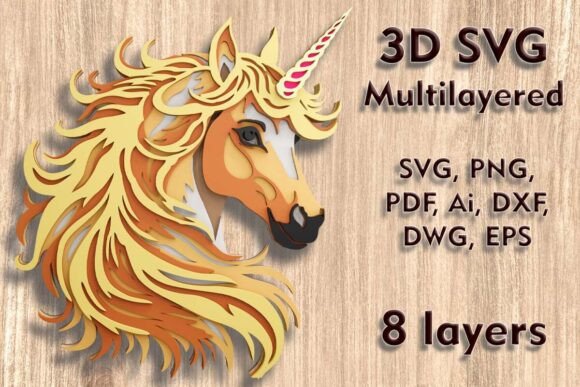
The first thing that strikes you about the Unicorn 3D SVG Multilayer Laser Files is its architectural complexity. With eight distinct layers, this is not a simple flat graphic. It is designed to build depth. For an embroidery reviewer, this translates immediately to potential for intricate applique design work or multi-hoop projects where fabric stacking creates a pseudo-3D effect. The mood is whimsical yet structured, avoiding the chaotic clutter that often plagues fantasy-themed designs. The silhouette is clean, which is crucial when you are dealing with multiple material layers.
The specified size of 250 x 225 mm (9.85 x 8.85 inches) is substantial. This is not a small chest logo; it is a statement piece. In my assessment, this scale fits perfectly into the realm of Wall Decor or large-format home textiles. However, the description notes that the size is easily increased, but one must be careful in reducing the design due to thin elements. This is a critical warning for any Etsy seller or craft business owner. If you attempt to shrink this for a baby hat or a small pocket patch, you risk losing the definition of those inner layers, turning a sophisticated design into a muddy blob of thread.
Real-World Application: The Custom Nursery Project
To test the viability of this asset, I imagined a real-life scenario: a custom order for a boutique nursery. The client wanted a focal point for a gender-neutral room, something more durable than paper art but softer than wood. Here, the Unicorn 3D SVG Multilayer Laser Files concept shines if adapted correctly. Instead of laser-cutting wood, I envisioned using eight layers of felt or heavy cotton, stacked and secured with satin stitch borders and minimal fill stitch interiors to maintain flexibility.
In this context, the design acts as a template for a layered textile sculpture. The eight layers allow for subtle color gradations, moving from deep purples at the base to ethereal whites at the top. This approach transforms a standard embroidery project into a tactile experience. Customers reacting to such a personalized gift are not just buying a picture; they are buying texture. The visual appeal here drives buyer engagement because it looks expensive and labor-intensive, which justifies a higher price point for your small shop product.
Navigating Technical Challenges
While the aesthetic potential is high, the technical execution requires precision. When working with a design that relies on eight layers, stitch density becomes your enemy if not managed well. If you are translating these laser layers into embroidered fabric stacks, you must ensure that each layer is securely anchored without creating excessive bulk. I recommend using a heavy-duty cut-away stabilizer to support the weight of the layered fabrics.
There are specific scenarios where this design should be used with caution. Do not attempt this on stretchy fabrics like jersey t-shirts without significant stabilization, as the weight of eight layers will distort the garment. Similarly, avoid using this on curved surfaces like caps unless you are highly experienced with 3D foam techniques, as the flat-layer logic of the Unicorn 3D SVG Multilayer Laser Files does not naturally conform to spherical shapes. Thin elements mentioned in the product description can easily break under the tension of a tight hoop size, so always test on scrap fabric first.
Commercial Viability and Brand Consistency
For commercial embroidery professionals, consistency is key. This design offers a strong brand identity if used correctly. It speaks to quality and attention to detail. When you present a finished product based on this structure, it elevates your portfolio. It shows that you understand dimension and material interaction. However, you must verify the licensing terms. Since this is originally a Laser Cutting file, ensure that your use of it for embroidery falls within the commercial rights provided by the creator. Many digital assets have different licenses for physical goods versus digital resales.
Creating printable mockup previews for your online store is also easier with such a distinct shape. The clear layers allow you to demonstrate the depth in photos, even before stitching begins. This helps manage customer expectations and reduces return rates. Whether you are selling tote bag design concepts or sweatshirt embroidery services, showing the breakdown of layers can be a powerful marketing tool.
Practical Designer Notes
Before you commit to a full production run, consider these practical steps:
- Test on Scrap Fabric: Always run a test stitch-out on the same fabric type you intend to use for the final product. Check how the layers align.
- Check Thread Color Contrast: With eight layers, color choice is vital. Use high-contrast threads for the edges to define each layer, or monochromatic tones for a subtle, sophisticated look.
- Review Stitch Density: If converting to pure embroidery, reduce density in overlapping areas to prevent needle breaks and fabric puckering.
- Confirm Hoop Size: Ensure your machine can handle the 9.85 x 8.85 inch dimensions, or plan for a multi-hoop strategy if your machine is smaller.
- Inspect Small Details: Zoom in on the thin elements. If they are too narrow for a satin stitch, consider using a running stitch or removing them entirely for smaller versions.
- Light vs. Dark Backgrounds: Test the design on both black and white fabric. Some layers may disappear on dark backgrounds if not outlined properly.
The Unicorn 3D SVG Multilayer Laser Files is a robust asset for designers who think beyond flat stitching. It challenges us to consider embroidery as a construction process. By respecting the layering logic and being mindful of the thin elements, you can create stunning Wall Decor or unique holiday embroidery gifts that stand out in a crowded market. Just remember, the magic lies not just in the file, but in the thoughtful execution of each layer.