Reviewing the Ginger Cat 3D SVG for Embroidery Use
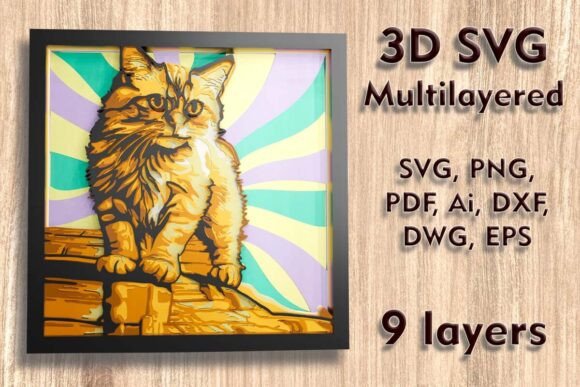
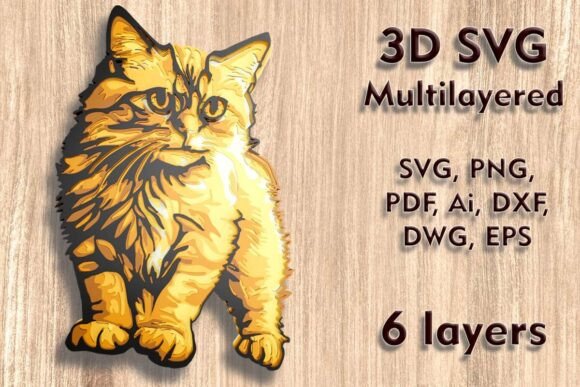
As a designer who spends half my life staring at digitized files and the other half watching needles punch through fabric, I have learned to look beyond the glossy preview images. When I first encountered the Ginger Сat 3D SVG Multilayer Cut Files, my initial reaction was one of aesthetic appreciation mixed with professional caution. The design features a charming ginger cat motif, structured in six distinct layers that create a sense of depth and dimensionality. While this product is technically categorized under Wall Decor and intended for Laser Cutting, its visual language offers intriguing possibilities for those of us working in textile arts. However, translating a multi-layered laser cut file into a stitched reality requires a critical eye and a steady hand.
First Impressions and Visual Personality
The immediate mood this design creates is warm, playful, and slightly whimsical. The silhouette of the ginger cat is recognizable and friendly, which is crucial for any handmade product aiming to connect emotionally with a buyer. In the context of embroidery, we are not dealing with physical layers of wood or acrylic, but rather the illusion of depth created through thread placement, color changes, and stitch types. The six-layer structure suggests a high level of detail. For an embroidery designer, this signals potential complexity. It means we are likely looking at a design that relies heavily on precise fill stitch work to mimic the solid areas of a laser-cut piece, possibly accented with satin stitch borders to define the edges clearly.
The layout is vertical, measuring 290 mm in height and 190 mm in width. This is a substantial size, roughly 11.5 by 7.5 inches. In the world of machine embroidery design, this footprint is significant. It is not a small chest logo; it is a statement piece. This scale naturally lends itself to larger canvases such as tote bags, pillow covers, or the back of a sweatshirt. The visual personality is bold enough to stand out from a distance, making it suitable for items where visibility is key, such as boutique merchandise or holiday gifts.
Real-World Application: The Custom Tote Bag Scenario
To truly evaluate the utility of this design, I imagined a specific real-life scenario. Suppose a client commissions a set of personalized reusable shopping bags for a local pet shelter fundraiser. They want something eye-catching that screams "cat lover." Using the Ginger Сat 3D SVG Multilayer Cut Files as a reference for digitizing or adapting into an embroidery file, I would place this design on a heavy-duty canvas tote. The sturdy fabric can support the weight of the stitching required for such a large area.
In this context, the ginger tones of the cat would pop beautifully against a natural beige or deep navy canvas. The layered effect could be simulated by using varying shades of orange and cream thread, creating a gradient effect that mimics the 3D aspect of the original laser-cut concept. Customers reacting to this finished product would likely appreciate the texture and the effort involved. It elevates a simple bag into a piece of art, increasing the perceived value and justifying a higher price point for the Etsy seller or craft business owner.
Navigating Technical Challenges and Fabric Choices
While the design is visually appealing, we must address the technical realities. The product description notes that the size is easily increased but warns against reducing it due to thin elements. This is a critical insight for embroidery. If you attempt to shrink this design to fit a small hoop, those intricate layer boundaries may become too dense for the needle to penetrate cleanly, leading to thread breaks or bird nests. Therefore, this design is best suited for medium to large hoop sizes.
Fabric choice is equally important. On stretchy fabrics like jersey t-shirts, a design of this magnitude requires robust stabilization. Without proper stabilizer support, the fabric will pucker, distorting the cat’s shape and ruining the clean lines of the layers. I would recommend a cut-away stabilizer for garments that will be washed frequently, such as a sweatshirt embroidery project or a custom apparel piece. For home decor items like pillow covers or wall hangings, a tear-away might suffice if the fabric is stable, but testing is non-negotiable.
Additionally, consider the stitch density. A six-layer interpretation in thread can become very heavy. If the digitizer does not manage the pull compensation and density correctly, the fabric may stiffen uncomfortably. This is less of an issue for a tote bag design or a patch, but crucial for wearable items. Always test the design on scrap fabric first to ensure the hand of the fabric remains acceptable.
Commercial Viability and Brand Consistency
For small shop owners and creative entrepreneurs, consistency is key. The Ginger Сat 3D SVG Multilayer Cut Files offers a distinct aesthetic that can help build brand recognition. If your shop specializes in whimsical animal-themed goods, this design fits seamlessly into that narrative. It works well for personalized gift markets, especially around holidays like Christmas or Mother’s Day, where cute animal motifs are in high demand.
However, transparency with customers is vital. Since this originates as a laser-cut file, ensure that your final embroidered version maintains the integrity of the design without promising impossible 3D physical depth. Use high-quality thread colors to enhance the visual appeal. Contrast is your friend here; ensure the ginger tones stand out against the background fabric. Testing the design in black and white mockups can help you verify that the shapes remain distinct even without color cues.
Practical Designer Notes for Implementation
- Check Licensing: Before selling any commercial embroidery items based on this design, confirm the license terms. Ensure you have the right to use the artwork for finished goods or digital adaptations.
- Test Stitch Density: Run a test stitch-out on similar fabric to check for puckering or thread breaks. Adjust density if necessary.
- Hooping Strategy: Given the 11.5 x 7.5 inch size, ensure your machine can handle this area. Consider split-hooping techniques if your machine has a smaller maximum hoop size, though this adds complexity.
- Thread Selection: Use high-sheen rayon or polyester threads to mimic the smooth finish of laser-cut materials. Matte cotton threads may not capture the same vibrant energy.
- Detail Inspection: Zoom in on the digital file to identify any extremely thin lines that might not translate well to thread. You may need to simplify certain elements during the digitizing process.
In conclusion, while the Ginger Сat 3D SVG Multilayer Cut Files is designed for laser cutting, its structural clarity and charming subject matter make it a strong candidate for adaptation into embroidery projects. With careful attention to scale, stabilization, and stitch management, it can produce stunning results for tote bags, pillows, and apparel. It is a design that rewards patience and technical skill, offering a unique opportunity to create textured, visually engaging handmade products that stand out in a crowded market.